Rotachrom Control software
ROTACHROM SOFTWARE PLATFORM
Integrated control for RotaChrom CPC Systems
At RotaChrom, software is an integral part of the purification platform. RotaChrom Software Platform is developed specifically for RotaChrom CPC systems, providing a unified digital environment for system operation, monitoring, and control.
By developing both the CPC equipment and its control software, RotaChrom brings hardware and software together within a single platform. This integrated approach enables the control environment to evolve alongside the technology, supporting system performance, usability, and the changing requirements of purification processes.
Rather than treating software as an additional component, RotaChrom designs it as part of the overall CPC system. This creates a common foundation across the RotaChrom portfolio and allows software development to remain closely aligned with equipment capabilities, application needs, and future functionality.
The result is a complete purification platform in which hardware and software are designed to work together, from system operation and process control to long-term development and support.
One platform. Three integrated components.
RotaChrom Software Platform brings method development, equipment control, process monitoring, and data evaluation into one integrated software environment. The platform consists of three dedicated components that support different stages of CPC operation, from designing and executing purification methods to real-time system control and post-run data analysis.
Together, CHROManager, CHROMControl, and CHROMViewer provide a consistent workflow across RotaChrom CPC systems.
CHROManager
Method development & sequence creation
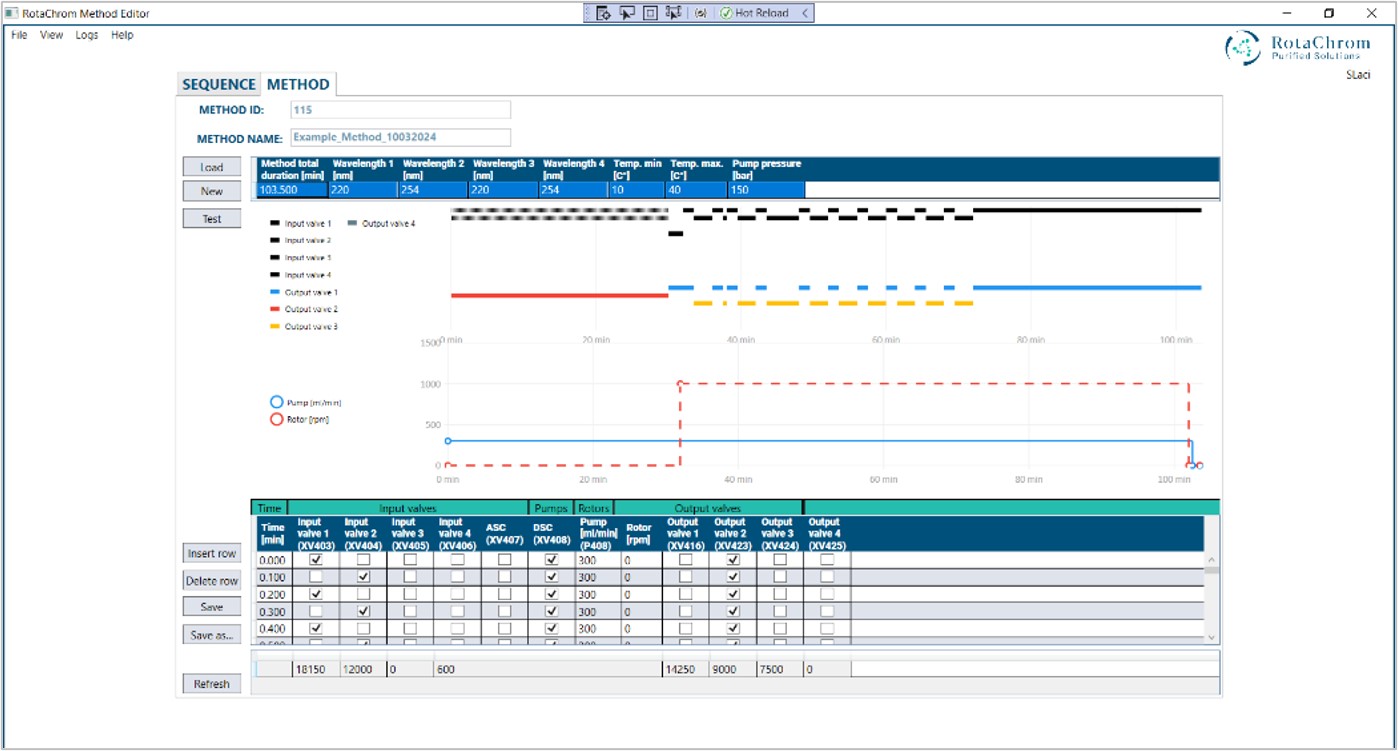
CHROManager provides the environment for building, configuring, and executing CPC purification methods and automated sequences. Its intuitive, time-table-based interface allows operators to define individual process steps, combine reusable methods into sequences, and prepare complex workflows before execution.
Built-in calculations and logical validation help operators configure executable methods while reducing manual preparation. The same method-development logic is used across laboratory and industrial RotaChrom systems, supporting a consistent approach as processes move between scales.
Key capabilities

• Intuitive, time-table-based method development
• Reusable methods and configurable sequences
• Automated calculation of process time and required liquid volumes
• Built-in logical validation of process parameters
• Clear identification of invalid or non-executable settings Continuous operation (24/7)
• Same method-development logic for laboratory and industrial systems
CHROMControl
Real-time equipment control & data acquisition
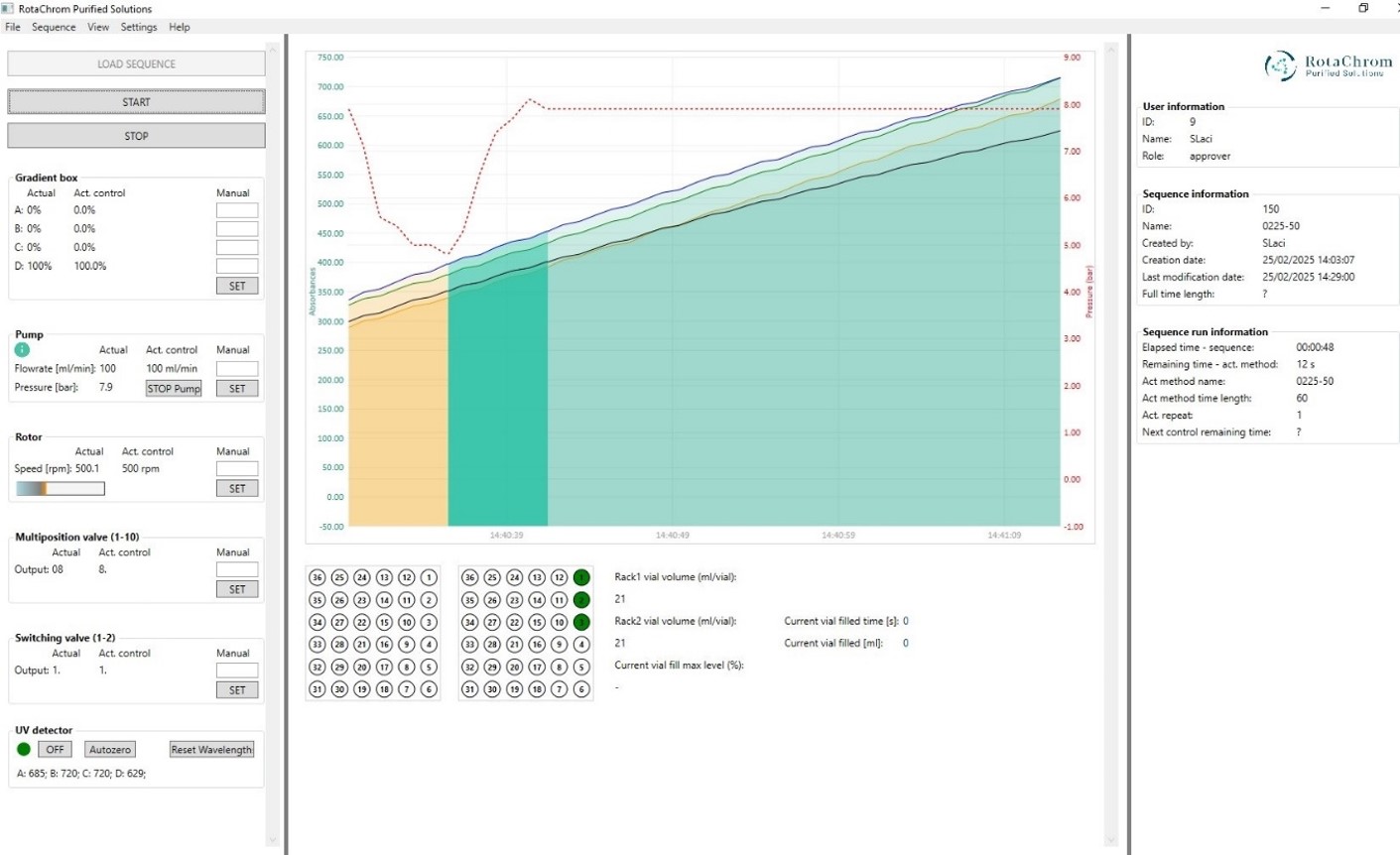
CHROMControl is the operational core of the platform, connecting the software environment directly with RotaChrom CPC equipment. It provides real-time control and monitoring of system components, process parameters, and chromatographic data while continuously recording information generated during operation.
Its configurable architecture allows the control environment to be adapted to different RotaChrom systems and specific customer configurations. Additional equipment can also be integrated through standard communication interfaces, supporting more complex process setups.
Key capabilities
• Real-time monitoring of equipment status, process parameters and chromatograms
• Automated collection of process data, events and user actions
• Configurable hardware and software architecture
• Adaptable to specific customer configurations and requirements
• Control of the CPC Modeler, rCPC and GMP rCPC systems
• Integration capability for additional devices through Ethernet or serial communication
CHROMViewer
Data retrieval, visualization & reporting
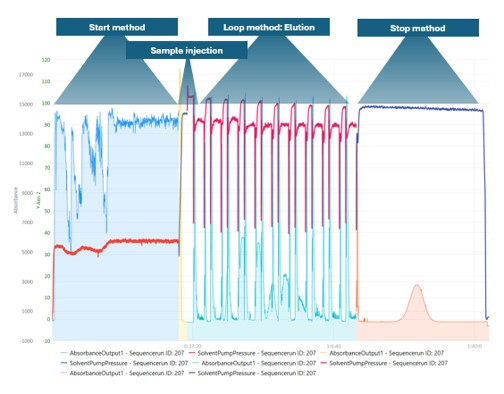
CHROMViewer turns stored process data into information that can be easily reviewed, compared, and documented. Operators can quickly retrieve previous runs, visualize chromatograms, and compare multiple datasets within the same environment.
Chromatogram alignment makes it easier to evaluate entire runs or selected sections side by side, while configurable reporting and export functions support documentation and further data processing.
Key capabilities
• Fast retrieval and filtering of stored run data
• Visualization and comparison of multiple chromatograms
• Alignment of chromatograms or selected sections for comparison
• Configurable PDF reporting
• CSV data export
• Direct printing of generated reports
Designed with regulated environments in mind
The platform integrates third-party GMP-approved software designed to support US FDA 21 CFR Part 11, EU GMP Annex 11 and additional GxP requirements, ensuring secure, traceable and controlled data management throughout the process.
• Access control
Individual user authentication and function-level permissions.
• Audit trail
Relevant system events, data changes and user interventions can be recorded with timestamps and user identification.
• Data integrity
Structured data handling designed to support completeness, consistency, reliability and traceability throughout the data lifecycle.
• Backup & archiving
Structured storage supporting data
What makes the platform different?
The platform represents an important step in the evolution of RotaChrom’s CPC technology. Many equipment manufacturers rely on third-party software to control their hardware. While this approach can provide a fast solution, integrating software developed independently from the equipment can also introduce compatibility limitations, communication issues and restrictions when adapting the system to specific process requirements.
The RotaChrom software platform is developed in-house specifically for RotaChrom CPC equipment. Hardware and software are therefore designed to work together from the beginning, rather than being connected as separate technologies. This integrated approach provides RotaChrom with direct control over the complete system architecture and enables the software to evolve together with the CPC hardware.
Why does this matter?
• Purpose-built integration.
• No third-party compatibility layer
• Faster adaptation
• Consistent user experience
• Designed for long-term development