How do advanced chromatographic techniques enable scalable, high-performance purification?
As purification challenges grow in complexity, a basic understanding of chromatography is often no longer sufficient to design efficient, scalable downstream processes. Advanced chromatographic techniques require deeper insight into separation mechanisms, solvent systems, operating modes, and equipment design to achieve the desired balance between purity, yield, and cost.
This white paper builds on fundamental chromatographic concepts and takes a deeper dive into liquid–liquid chromatography and Centrifugal Partition Chromatography (CPC). It explains how separation performance is governed by partition coefficients, resolution, and operating modes, and why CPC differs fundamentally from traditional solid-phase techniques such as preparative HPLC.
By combining theory, system design principles, and real-world application examples, the paper demonstrates how advanced CPC-based purification strategies enable isolation, separation, and remediation tasks that are difficult or inefficient with conventional chromatography.
Need a refresher on the fundamentals? Explore our Basic Chromatography white paper first.
About RotaChrom
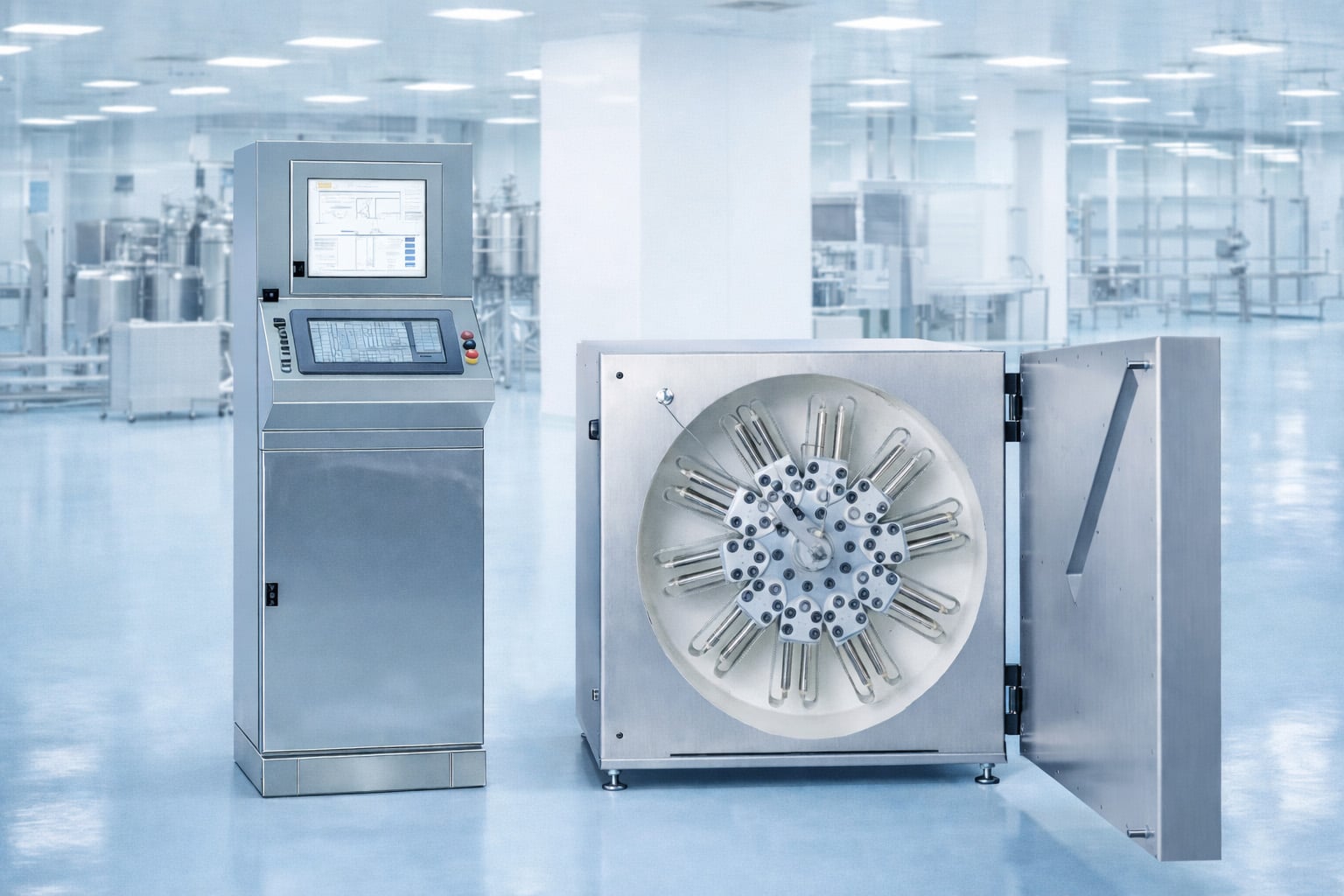
RotaChrom Technologies develops and manufactures industrial-scale centrifugal partition chromatography (CPC) technology platforms. Founded in 2014, RotaChrom distributes its CPC devices around the world. With the help of their industry-leading chemists and engineers, their instruments revolutionized purification by providing cost-effective industrial-scale chromatography solutions to customers in various industries, including pharmaceutical, biotechnology, chemistry, nutraceutical, and botanical extracts.